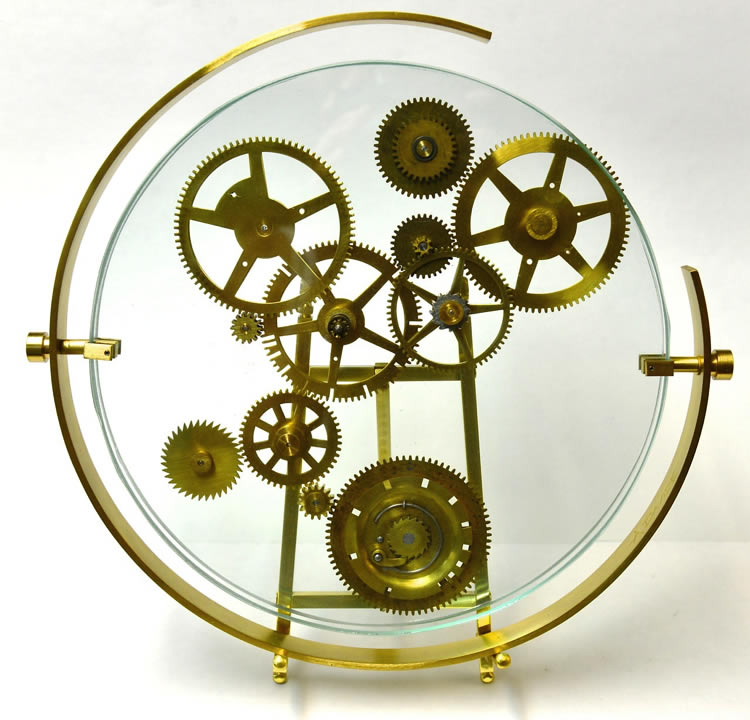

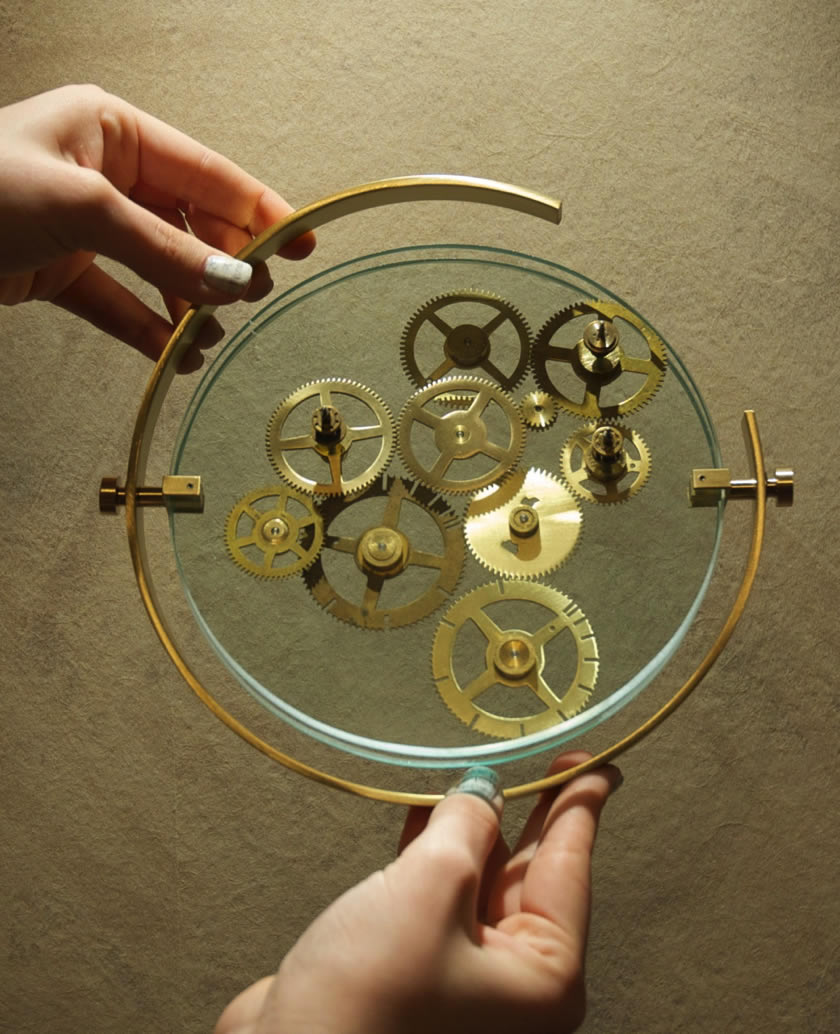
9”diameter
ANDREA DAVIDE Talks About This Process In Depth
The following is a description of the process of what I make (not concept
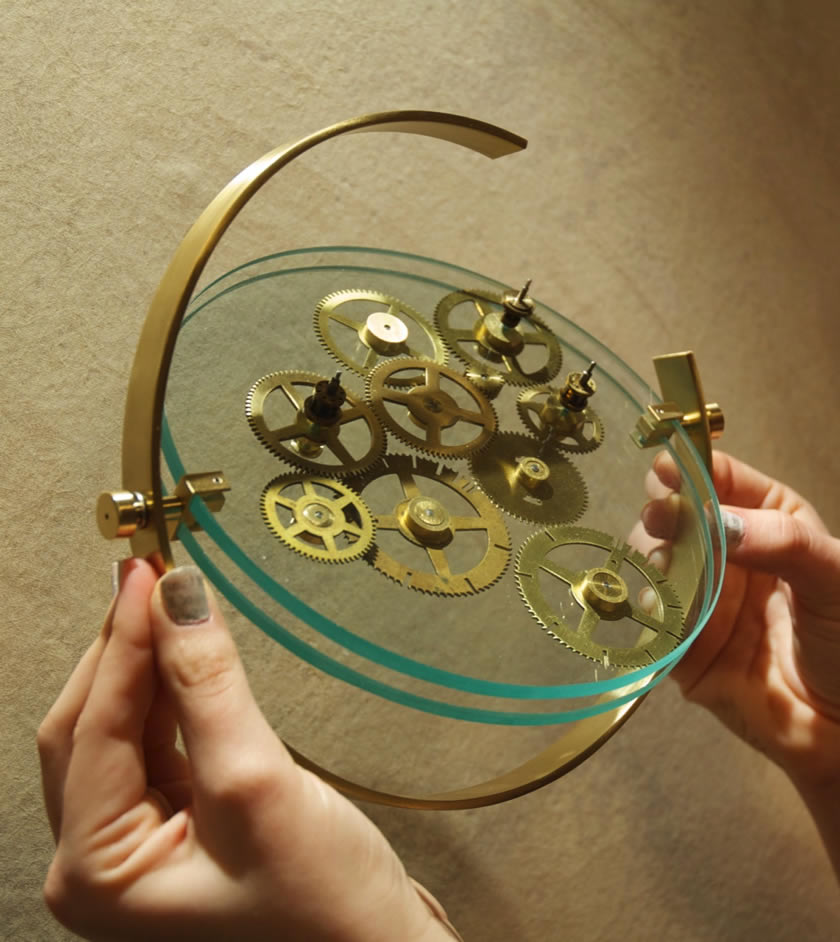
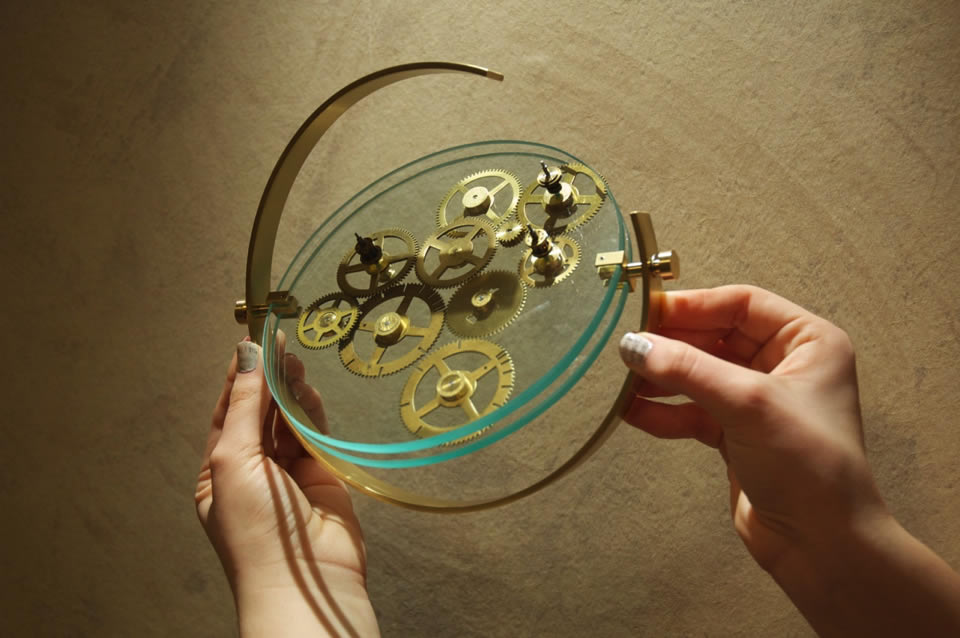
This is the RoundTimer, which is the basic unit/component of many (not all) of my kinetic sculptures. It probably is worth describing how it is made. Some of them have painted gears, this one is raw. In this RT, I have taken antique clock gears, usually from cuckoo clocks or grandfather clocks.
I purchase the gears (usually on eBay from old clockmakers, or relatives cleaning the shops of relatives who passed away because clockmaking really is a lost art. You can look it up on Wikipedia.
The RoundTimer is essentially a series of gears which are sandwiched between two sheets of glass.
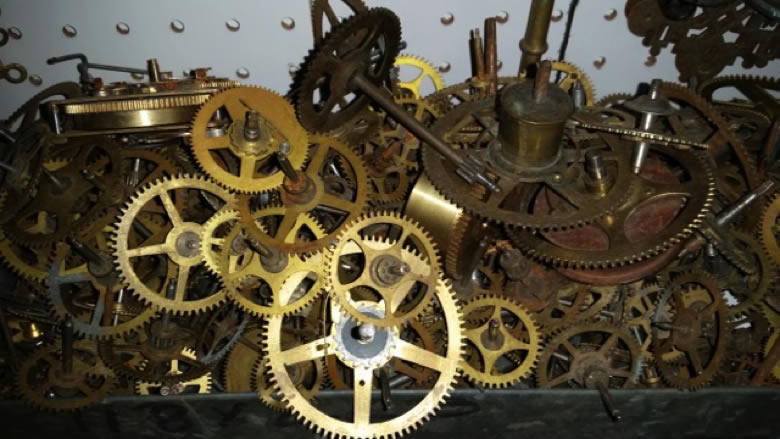
I purchase boxes of random gears which are rusted and mangled and just thrown in together. The job becomes separating out the ones with broken teeth or that have been bent from being thrown together. Wait – I’ll take a quick photo with my phone and include it here…
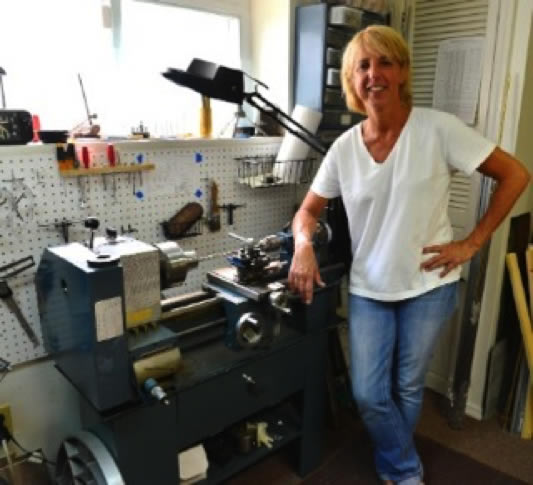
I then begin the laborious process of separating gears from their attached shafts. The gears have hubs which are swaged into the gear and onto steel shafts, which means the hubs have been hit with hammers and it’s edges are punched and bent and embedded into the gear itself. So the hub must be removed without bending the delicate gears. This works about 70% of the time. I use my metal lathe to accomplish this task, with special cutting tools
Once the shafts and hubs have been removed from the clock gears successfully, they are polished up (or sometimes left as is, looking old). Then new hubs must be made.
To accomplish this, each gear together with its hub must be the exact same height, within .002″ or the glass will not fit flatly together. I make my hubs from long brass rods using my lathe. Then I drill a hole into the hub to fit special stainless steel pins which I also make on the lathe. These pins, called “dowel pins”, will attach the hubbed gear into the glass.
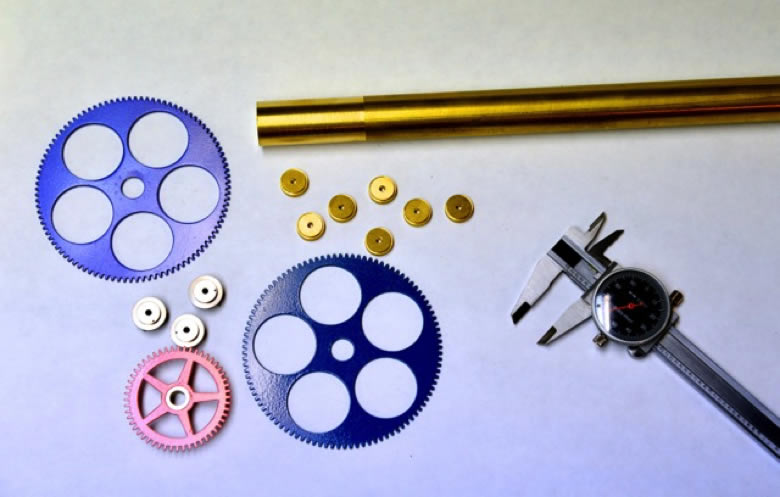
So we have the gears, newly freed from their old shafts and hubs, plus we have new hubs of precise measurements, and we have a bore through the new hubs which will be used to attach the gears into the glass.
Now we must drill into the glass with special precision drilling equipment. I drill halfway into the glass. This takes diamond drills and enormous patience. If the glass is .225” thick, I drill holes .120” deep. The gears have to be very precise in their placement as well. If the gears are attached too closely, the gears will bind up and not turn. If the gears are placed even .006” too far apart, the teeth will not mesh and the gears will not turn.
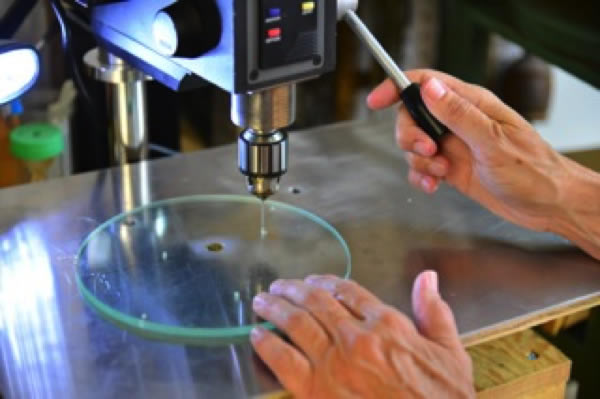
So now we have the gears and hubs all uniform size, and we have drilled into the glass to attach the gears. We place the second sheet of glass on top of the setup, and now have to attach the second sheet.
I use my milling machine to take long bars of brass, cut them down and then mill them into precise shapes which will allow the glass to slide into them, attach to the glass, and also has the exact dimension (height) as the hubs that I’ve made
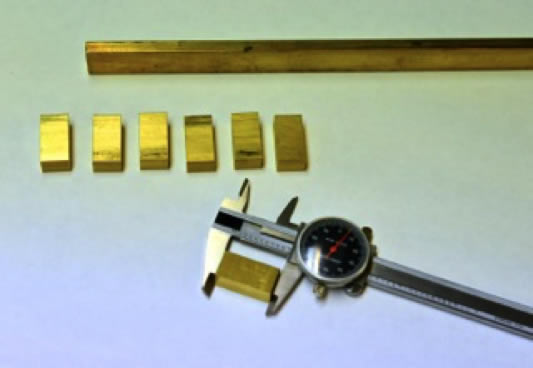
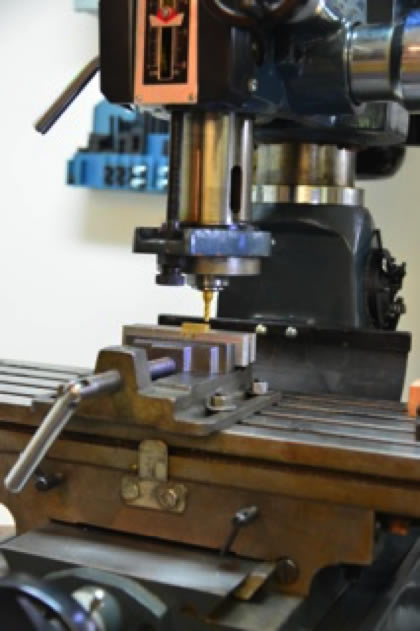
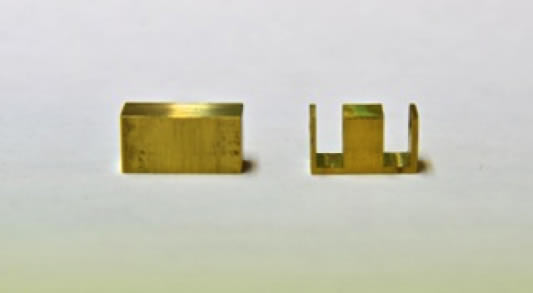
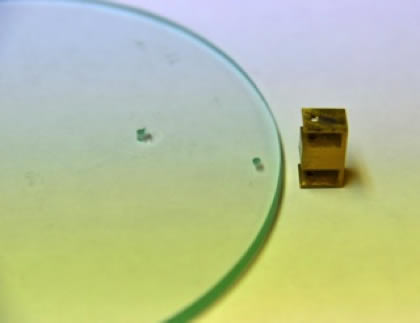
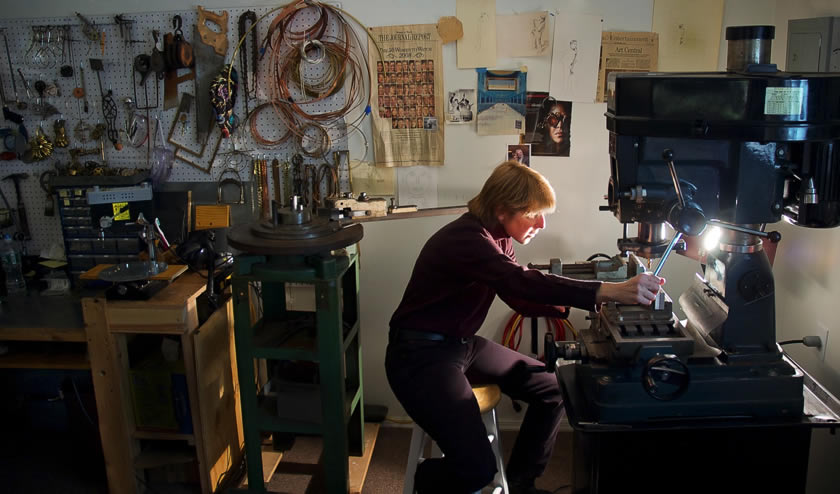
After the attachments are milled on the milling machine, and accuracy is within 4 or 5 thousandths of an inch, I attach both sheets of glass and the gears should be free turning.
Then I go to my Diacro Bender:
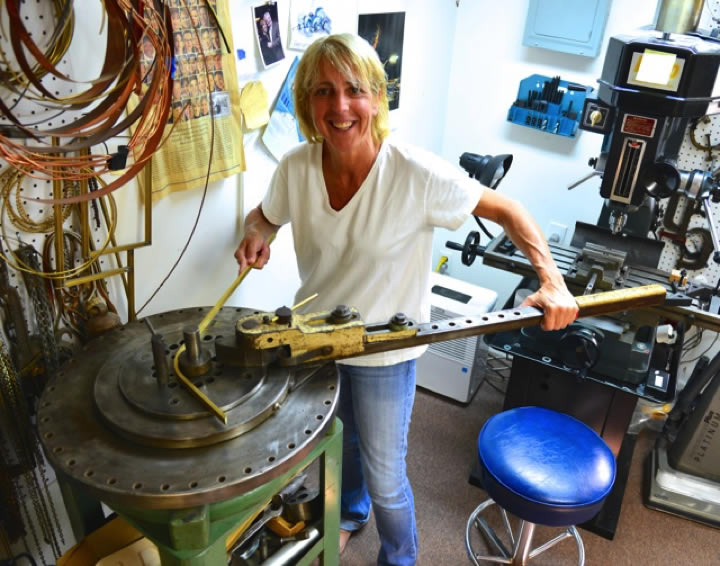
which is used for bending metal bar and pipe. I use this to make the outer housing for the RoundTimer.
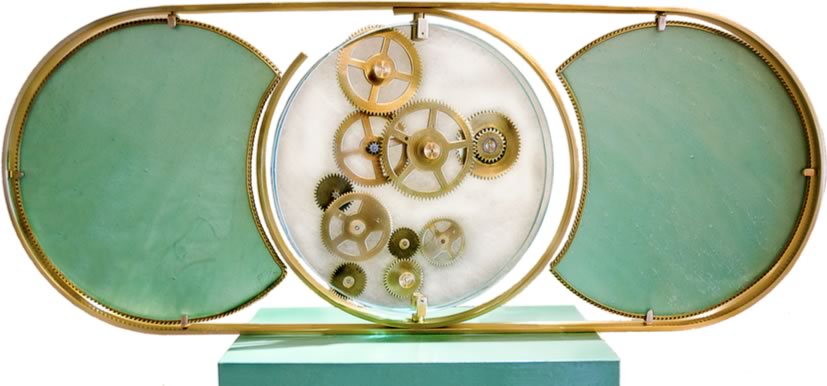
Afterwards, sometimes I encase the RT in stone, sometimes I leave it as is. Each one is unique on every level, be it having hand made gears, or antique gears, or maybe the gears are hand painted and move on severel levels.